
In this series of articles, we are analyzing the various changes that the affected associations will need to make to their policies, procedures, and, potentially, their governing documents by January 1, 2027, to comply with the new requirements of the Minnesota Common Interest Ownership Act (“MCIOA”) adopted in SF 1750. Again, this bill only made changes to MCIOA and therefore, with the exception of the resale disclosure requirements, only affects associations that are currently governed under MCIOA.
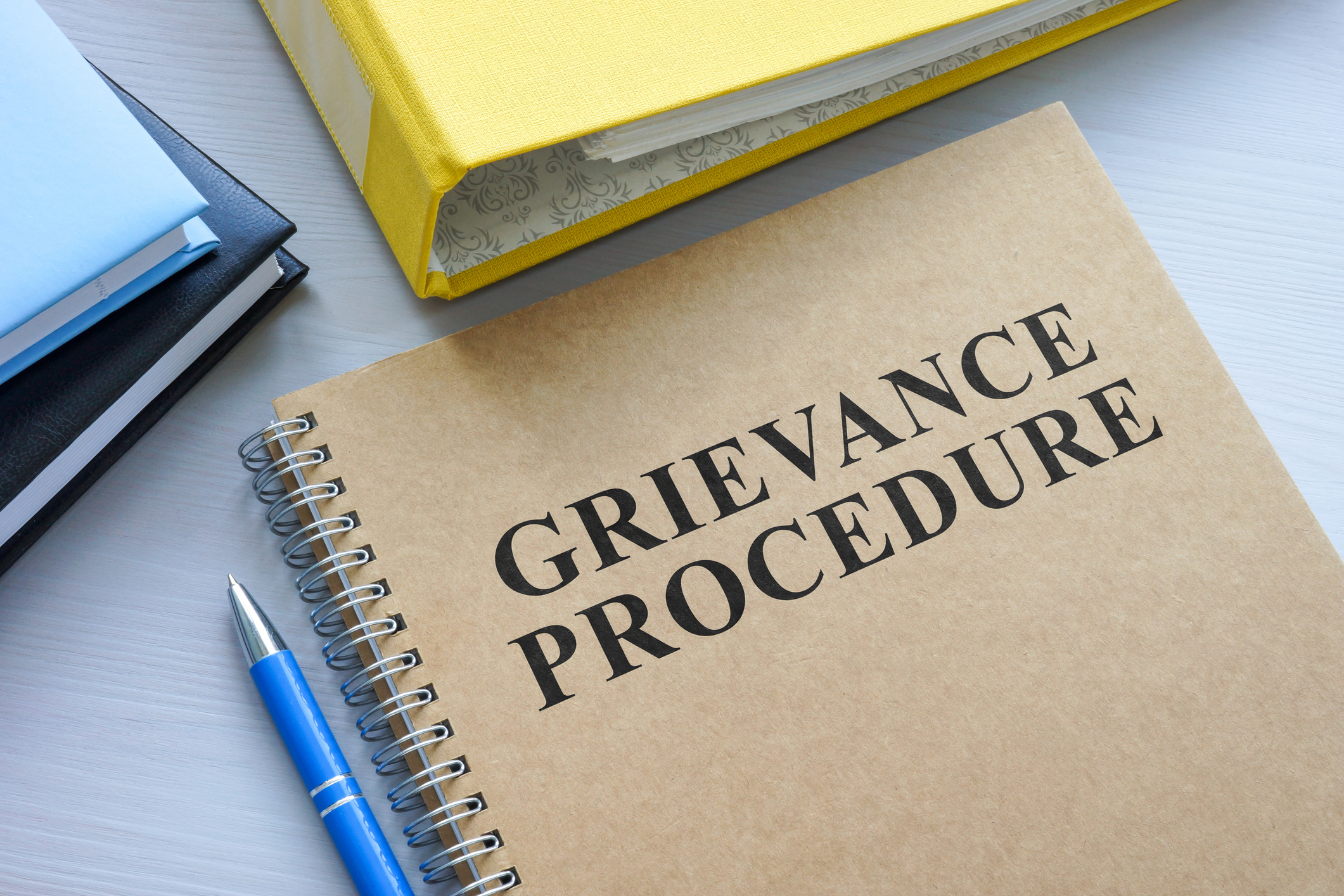
In addition to the changes that associations will need to implement to their violation notices and hearings that have been discussed in a previous article in this series, the bill will also require associations to provide a grievance process for owners. Earlier drafts of the bill would have required a board member to sit down with a homeowner and attempt to resolve their disputes and grievances. Not only does that not make sense from an operational standpoint, since a single board member does not have authority to make any decisions on behalf of the association, but it also could potentially put those board members in harm’s way if the situation involving a particular homeowner was especially volatile. Fortunately, the legislature made significant improvements to this requirement in the final draft.
The current language, found in Minn. Stat. 515B.3-102(i), states as follows:
“A board must allow a unit owner to present, orally or in writing, a grievance to the board or a committee appointed by the board on a matter other than a fine … or an application to alter a unit… The board must make a good faith effort to resolve the grievance or, if resolution is not achieved, refer the unit owner to the common interest community ombudsperson. An association may not impose any fees or charges on the unit owner for making the presentation.” [statutory cross references omitted].
As with many other parts of SF 1750, this section contains vague and ambiguous language that will make it difficult for boards to know how to comply. A reasonable interpretation is that there must be some mechanism set up for owners to contact the board and complain about things that do not relate to a violation notice or an architectural change request. This can be done via an email to the board or property manager, or through some sort of submission through the Association’s web portal. For most associations, there has always been some method for owners to contact the board with their complaints and grievances, so this is not anything new. However, the next sentence does add a new requirement that the board actually make a good-faith attempt to resolve the grievance. So, association boards cannot intentionally ignore an owner or refuse to respond to their complaints. They must respond in some fashion that seeks to resolve the grievance. The statute does not indicate a timeframe within which the board has to respond, nor does it indicate what the board has to do in response, but it does impose a reasonableness standard on the board’s efforts. It also indicates that if the grievance is not resolved, the board will be required to refer the unit owner to the CIC Ombudsperson, which is a new office that was created by the legislature in 2025 to provide information and attempt to assist unit owners and associations in resolving disputes.
If an owner contacts the Ombudsperson, the Ombudsperson will likely reach out to the Association’s board of directors and offer to assist in resolving the dispute. There is no requirement that a board or an owner respond or that they must agree to any dispute resolution process. Theoretically, boards could simply refer all grievances to the CIC Ombudsperson without responding to the unit owner, but the hope is that boards will make more of an effort to resolve minor disputes on their own without the necessity of involving an outside third party. In that regard, the Ombudsperson is required to collect data on the inquiries and disputes that are referred to that office and report that information to the legislature. Those reports could inform future legislation regarding community associations, so it is important for boards and managers to remember that when dealing with that office and with homeowners. As of the date that this article is being written, there is currently no acting CIC Ombudsperson, as that position became vacant earlier this year. Hopefully, that role will be filled, and the new Ombudsperson will have gotten settled in the position before this new requirement goes into effect.
Finally, the new language in this section makes it clear that associations cannot charge an owner any sort of fine or fee to make the presentation of their grievance, whether that is done in writing or the owner is allowed to present their grievance orally. However, it says nothing about associations charging for responding to said grievance. While not all grievances or responses implicate matters for which an association is even permitted to assess an owner’s fees or charges, if responding to a grievance does constitute enforcement of any provision of the Association’s governing documents and/or the Act, then MCIOA does allow an association to assess an owner’s unit for legal fees and costs incurred in connection therewith. But the new legislation addresses this as well. Newly added Section 515B.3-125 will require an association to notify a unit owner prior to referring an inquiry[1] to the association’s legal counsel that it intends to do so and that the association may incur legal fees that could be assessed to the unit owner. Notice will not be required prior to referring a matter to the association’s attorney if i) the matter involves pending or threatened litigation, ii) the unit owner has retained legal counsel and the association is responding to the owner’s attorney, or iii) immediate legal action is necessary to preserve the legal rights of the association or to prevent immediate harm to persons or property. Further, while the statute is not clear on this point, presumably the notice is also not required if the association has no authority to assess or intention of assessing the unit owner for any legal fees incurred and simply chooses to obtain advice from its attorney because it is the prudent thing to do. Boards should always consult with their attorney if they have questions about whether or when legal fees can be assessed back to owners.
If you have any questions about the legislation, compliance with the new statutory requirements, amending governing documents, or any other matter affecting your association, please feel free to contact the author.
Click here to read part one of this series.
Click here to read part two of this series.
Click here to read part three of this series.
[1] The bill does not define what is meant by an “inquiry” or whether this is the same as a “grievance,” which is also undefined. However, best practice would be to send the required notice anytime an association intends to refer any communication from a unit owner to the association’s attorney that could potentially result in an assessment of legal fees to the owner, subject to the exceptions noted above.