
Co-Authored by: Alec Sherod & Evelyn O’Brien
With absentee ownership of farmland growing in the United States, well-structured lease agreements are vital to ensuring operator and landlord profitability. In 2024, approximately 348 million acres of U.S. farmland were leased to operators. Because farmland has high profitability potential and many families prefer to keep farmland in their families, ownership rarely transfers to third parties. Farmland availability is expected to remain highly restricted over the next three years, with total transactions accounting for just 5% of all agricultural land. Projections indicate approximately 23 million acres will be sold to third parties, while 20 million acres will be transferred to relatives. Because buying land may not be an option due to a lack of availability, rental agreements are more important than ever. While every standard lease must explicitly define essential terms, such as property boundaries, the contracting parties, the term duration, and the rental rate, agricultural leases present distinct complexities. Effective agricultural agreements must incorporate specialized clauses to manage the distinct operational, environmental, and statutory liabilities inherent in farming operations.
Although oral lease agreements are traditionally popular in the agricultural sector, relying on a handshake is highly discouraged. It is important to note that real estate contracts lasting longer than one year are only legally enforceable if they are in writing. Beyond compliance, a written lease provides both landlords and tenants with a record of their respective rights and obligations. Furthermore, a well-structured lease will clearly define how to resolve any potential disputes that may arise throughout the tenancy.
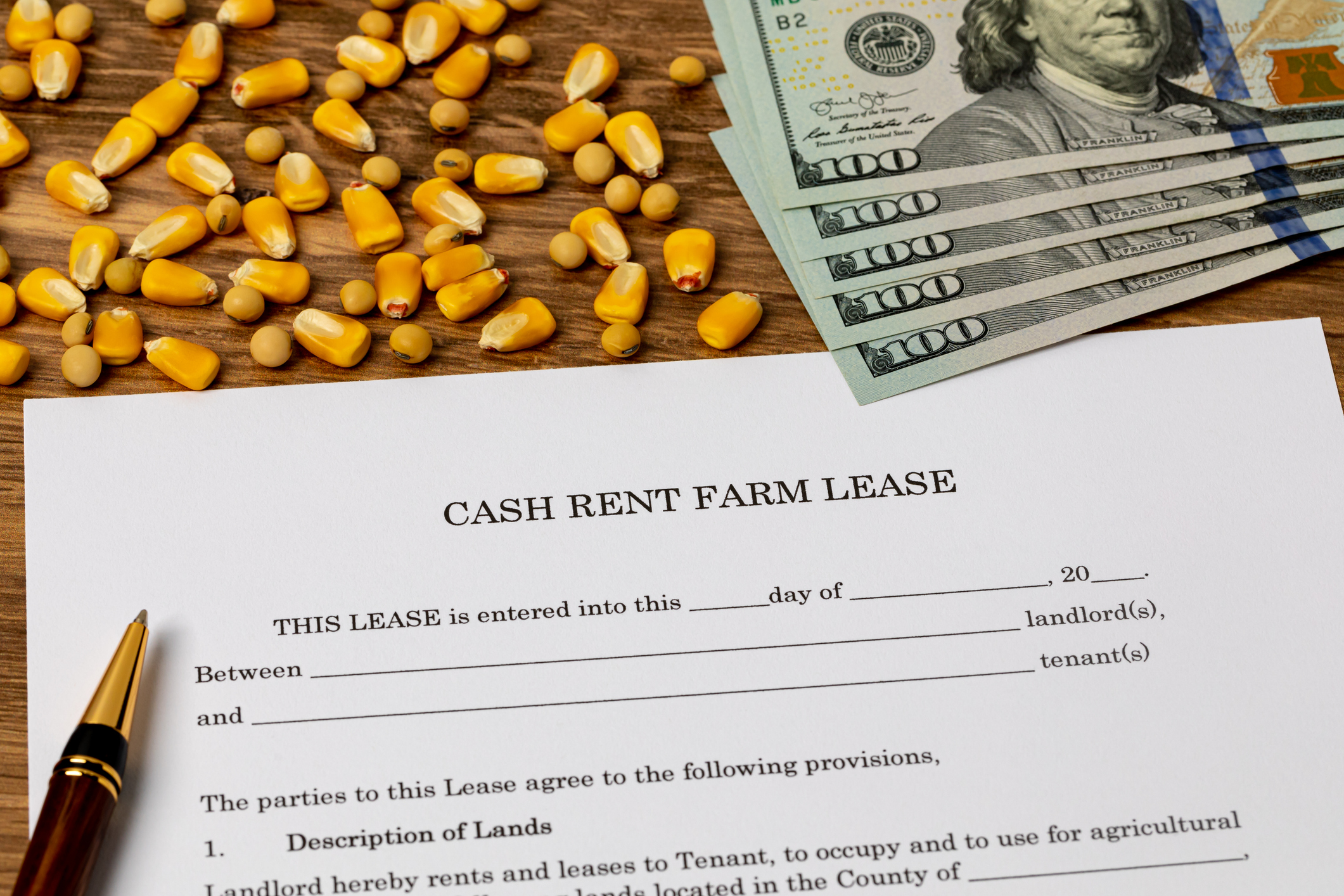
The most common type of lease is a cash rent lease, which requires the tenant to pay the landlord a fixed amount of rent per acre. Typically, land rental rates are based on the profitability of crop production in the previous year or two; however, these rates are often difficult to determine due to the unpredictability of prices and yields. With a cash rent lease, the risk is primarily on the tenant, as the landowner is guaranteed a specific return, regardless of the success of the harvest or the market.
Another common farm lease is a crop share lease. Although there are certain nuances and variations in each state, generally, the landowner and tenant share input costs (fertilizer, seed, etc.) as well as crop revenues. The contribution proportions vary depending on the crop and the landowner and tenant’s preferences. Crop share leases disperse the risk and reward more evenly between the landowner and tenant; however, due to the shared nature of responsibilities, it is essential that the terms of the agreement are clearly outlined to avoid disputes.
Finally, the flex or hybrid lease combines these two principles. The tenant agrees to pay a base rent per acre as well as a “bonus” if a trigger price is met. Oftentimes, the landowner may reduce the base rent due to the potential for a higher payout. The trigger price is typically set based on the revenue per acre, with the yield and market price being determinative factors. If the “trigger” is met, the overage will be multiplied by a set percentage, and that payment is made to the owner on top of the previously paid base rent. Similar to the crop share lease, this agreement allocates the risk relatively evenly, and it provides landowners with more stability due to the guaranteed payment of the base rent.
Regardless of which lease producers and landowners choose, it is critical that the lease clearly defines the responsibilities of each party, rental rates, input costs, maintenance costs, property boundaries, termination procedures, insurance coverage requirements, and any other terms that may be unique to the agreement. A written land lease agreement provides a clear reference point and helps prevent and address disputes by reducing ambiguity.
When negotiating terms, operators should consider proposing cost-sharing arrangements for improvements to the land. This makes improvements more feasible, while increasing the value of the land for the landowner. Additionally, adding a renewal option to an agreement provides stability for farmers and reassures landowners of a committed and reliable tenant. Alternatively, landowners should establish a notice period for renewal to ensure both parties have adequate time to consider their options. Finally, given ongoing market volatility, landlords should consider incorporating rent revaluation mechanisms to ensure lease rates remain aligned with market conditions. Ultimately, a detailed, written lease serves as more than a mere legal formality; it functions as a framework that aligns the economic interests of both parties while safeguarding the productivity of the land.
If you have any questions about the information above, please contact Alec Sherod at asherod@hjlawfirm.com or Evelyn O’Brien at eobrien@hjlawfirm.com.